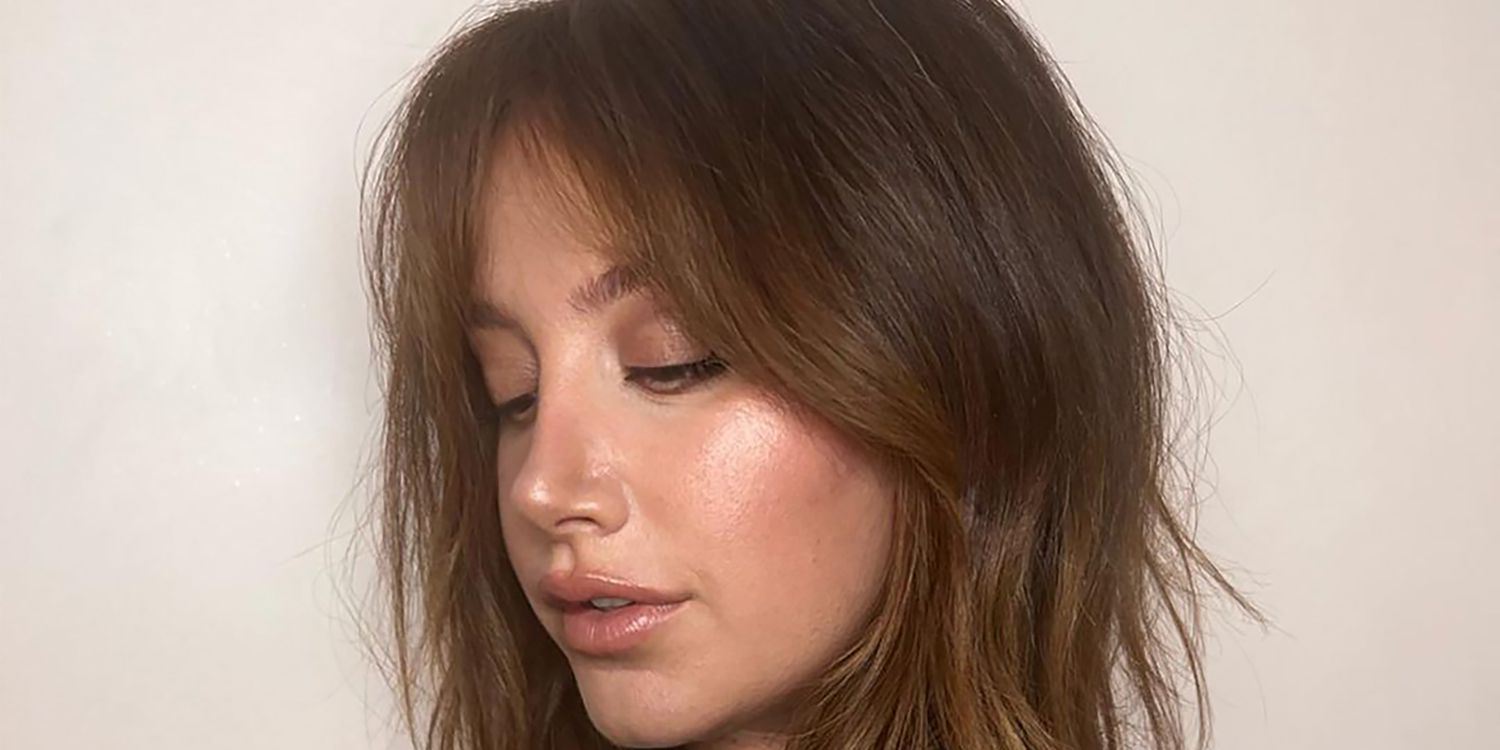
Ashley Tisdale is making waves with a new cut that exudes major "French girl" energy. On Tuesday, the actress joined a growing list of celebrities by sporting brand-new bangs with a series of selfies on Instagram. In the images, Tisdale showed off her francophile-approved bangs and her artfully styled brown hair.
In the first image, Tisdale gazes slightly away from the camera while making a pout. In the last photo, Tisdale poses from the side and parts her bangs down the middle, creating curtain bangs.
"In my French girl era", she fittingly captioned the post. Porter even chimed in in the comment section to show his pride in their creation. "We truly opened a new hair era for you", he wrote.
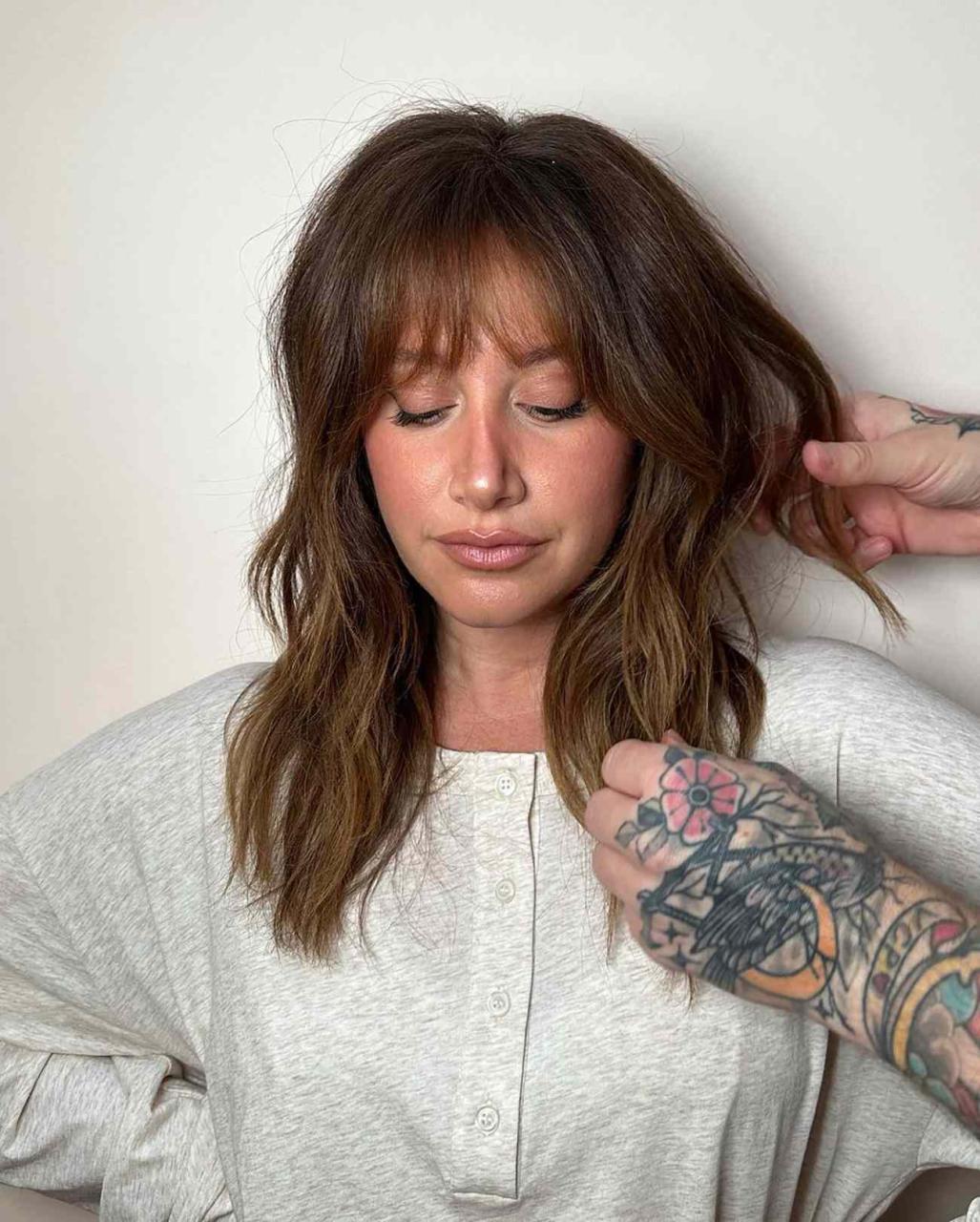
Tisdale also took to her Instagram Story to give her fans a behind-the-scenes look at videos from a photoshoot showcasing her new hairstyle. In another clip, Porter's hands could be seen fixing her hair back into place, and she wrote: "@buddywporter is now going to have to style my hair every day."
The actress isn't the first celebrity to take the plunge. Olivia Wilde also recently unveiled bangs, and Gigi Hadid sported blunt bangs (unclear if real or extensions) in Miu Miu's latest project.
Earlier this year, Tisdale opened up about her struggle with alopecia in a video on Instagram. "Any type of hair loss can affect your self-confidence," she wrote in her caption. "Especially if you feel like you're the only one going through it. That's why I want to talk about it openly — because it's nothing to be ashamed of."
What makes French girl bangs different
French girl bangs occupy a particular place in the world of fringe cuts. Unlike blunt, heavy bangs that require precise styling each morning, French girl bangs are intentionally undone. They fall somewhere between a curtain bang and a full fringe, with longer pieces on the sides that frame the face and shorter, wispier pieces in the centre.
The signature features include:
Length and weight
French girl bangs are typically lighter and less dense than traditional blunt bangs. The stylist removes less hair from the centre and leaves longer, wispier pieces towards the temples. This creates a softer overall effect that doesn't dominate the face.
The centre part
While French girl bangs can be styled in various ways, they're most often associated with a centre part. The bangs sweep slightly to either side, creating that signature curtain effect. This is in contrast to blunt bangs, which are usually worn straight across.
Movement and texture
The wispy nature of French girl bangs means they have natural movement. They don't lie perfectly flat; they shift and change throughout the day, which is part of their charm. This also makes them more forgiving than heavier fringes — a little wind or humidity won't ruin them.
Grow-out grace
Because French girl bangs are already longer than traditional bangs, they grow out more gracefully. Within a few months of the cut, they tend to settle into a longer, side-swept style that can be worn as face-framing layers rather than a fringe.
The Buddy Porter approach
Buddy Porter, the stylist behind Tisdale's new cut, has built his reputation on cuts that are wearable, low-maintenance, and flattering across face shapes. His approach to French girl bangs emphasises the wispiness — the careful removal of bulk while preserving length — that defines the style.
The technique typically involves cutting the bangs dry rather than wet. Wet hair shrinks as it dries, and the amount of shrinkage varies by hair texture. Cutting dry allows the stylist to see exactly how the bangs will fall and to adjust accordingly. This is particularly important for French girl bangs, which depend on the right balance of weight and movement.
The styling is also different from traditional bangs. Where blunt fringes require careful blow-drying with a round brush, French girl bangs are often scrunched or air-dried to enhance their natural texture. A little mousse or texture spray can add definition, but the goal is a soft, slightly imperfect look rather than a polished one.
The celebrity trend
Tisdale's French girl bangs are part of a broader celebrity trend that has been building for several seasons. The list of celebrities who have recently debuted some version of the cut is long and varied, spanning ages, hair types, and personal styles.
Olivia Wilde, mentioned in the original article, debuted a wispy, centre-parted fringe earlier in the year. Her cut was slightly heavier than Tisdale's but in the same spirit — soft, face-framing, intentionally undone.
Gigi Hadid's appearance with blunt bangs at a Miu Miu event raised questions about whether the bangs were real or extensions. The ambiguity is itself interesting: the cut had become so popular that even those who didn't want to commit to it could try it temporarily.
Other celebrities who have joined the trend include Zendaya, who has worn various versions of curtain bangs in red carpet appearances; Jenna Ortega, whose Wednesday Addams fringe has inspired countless salon requests; and Anne Hathaway, who returned to bangs after years of centre-parted styles.
The breadth of the celebrity adoption is part of why the trend has staying power. Unlike some trends that are quickly associated with one celebrity and then fade, French girl bangs have been adopted by enough different people that the look itself — rather than any individual wearer — has become the focus.
Tisdale's alopecia disclosure
The reference to Tisdale's alopecia disclosure is significant. Alopecia — the medical term for hair loss — affects millions of people, but it remains under-discussed in public. The visibility of celebrities like Tisdale, Jada Pinkett Smith, and others who have spoken openly about their experiences has helped reduce the stigma around the condition.
Tisdale's disclosure earlier in the year came in the form of an Instagram video in which she showed the visible thinning around her hairline. The response was overwhelmingly supportive, with thousands of comments from followers sharing their own experiences with hair loss.
For those considering French girl bangs as a way to deal with thinning hair, there are several things to know. The cut can be very flattering for those with hair loss at the hairline, as the longer, side-swept pieces can help disguise thinning areas. The lighter weight of the bangs also puts less stress on the hair than heavier cuts.
However, anyone considering bangs while experiencing thinning should consult with a stylist experienced in working with hair loss. Not all stylists are familiar with the specific considerations, and a poorly executed cut can make thinning more obvious rather than less so.
How to ask for French girl bangs
For those inspired by Tisdale's cut, communication with the stylist is key.
Bring references
Visual references are essential. Bring several images of French girl bangs from different sources — different celebrities, different textures, different lengths. This gives the stylist a sense of what you want without requiring a verbal description that may be ambiguous.
Discuss maintenance
French girl bangs require some maintenance, but less than blunt bangs. They need to be trimmed every 6–8 weeks to maintain their shape, and they benefit from some daily styling to keep the wispy quality. Discuss your willingness to commit to this maintenance with your stylist.
Consider your face shape
French girl bangs are flattering across most face shapes, but they work particularly well on oval, heart, and long faces. For round faces, the longer pieces on the sides can help elongate the face. For square faces, the soft texture can help balance the angular jawline.
Think about your hair texture
French girl bangs work on all hair textures, but they require different approaches. Fine, straight hair tends to lie flat and may need texturising to achieve the wispy effect. Wavy hair is naturally well-suited to the style. Curly hair can wear a version of the cut, but the curls will significantly change the shape and may need to be styled when wet to preserve length.
Styling French girl bangs at home
Styling French girl bangs at home is simpler than styling blunt bangs, but it does require some attention.
Air drying
Air drying is often the best approach for French girl bangs. Wet the bangs and let them fall naturally, separating the pieces with your fingers as needed. The natural texture of the hair will create the wispiness that defines the style.
Diffusing
For those with wavy or curly hair, a diffuser attachment on the blow dryer can help maintain the natural texture while setting the bangs in place. Use low heat to avoid disrupting the shape.
Round brush technique
For those who want a more polished look, a small round brush can be used to give the bangs a slight curve away from the face. Roll the brush under the bangs while blow drying, then let them cool in the curved shape.
Texture spray
A texture spray or dry texturising spray can add the slightly undone, piecey quality that defines French girl bangs. Spray lightly at the roots and scrunch gently with the fingers.
Mousse
For those with fine hair, a small amount of mousse applied to damp bangs can add volume and hold without weight. The mousse should be worked into the hair from roots to ends before styling.
The longevity of the trend
French girl bangs have been part of the beauty conversation for several years now, and they show no signs of fading. The combination of flattering shape, manageable maintenance, and broad appeal has made them one of the most-requested cuts in salons worldwide.
The trend is also evolving. The original French girl bang was quite uniform — wispy, centre-parted, and shoulder-length around the face. Today's versions range from the very subtle (just a few face-framing pieces) to the more pronounced (longer, thicker pieces that function almost like a curtain bang). This evolution keeps the cut from feeling dated and makes it accessible to those who want to participate in the trend at various intensities.
For those considering the cut, the timing is as good as ever. The style has proven its staying power, the celebrity references are abundant, and the techniques for cutting and styling are well-established. The only question is whether you're ready to commit to the maintenance — and whether you have a stylist who can execute the cut well.